
PERTHTURF GROUP
  1. Home
  2. Renovate

Renovate a tired lawn.

Spongy, patchy, dry or thin? Take the thatch out, let the soil breathe, fix the levels and feed it back to health.

Lawn being cut in low morning sun

Renovate

Scarifying, de-thatching and vertimowing

Spring to autumn for Kikuyu, Couch and Zoysia

Scarifying, de-thatching and vertimowing are names for the same job. Vertical blades cut down through the lawn and pull out the thatch, the layer of dead and dying stems and roots that builds up between the soil and the grass blades.

Some varieties produce more thatch than others, and over-watering or over-fertilising speeds it up. Removing it lets more light into the lawn, reduces fungal issues and lets water and fertiliser actually reach the soil, so roots grow stronger.

De-thatching can be done any time in the growing season, but leaving it too close to winter risks the lawn not recovering before dormancy.

  • Removes thatch and spongy build-up
  • Reduces fungal problems
  • Makes watering and fertilising work again
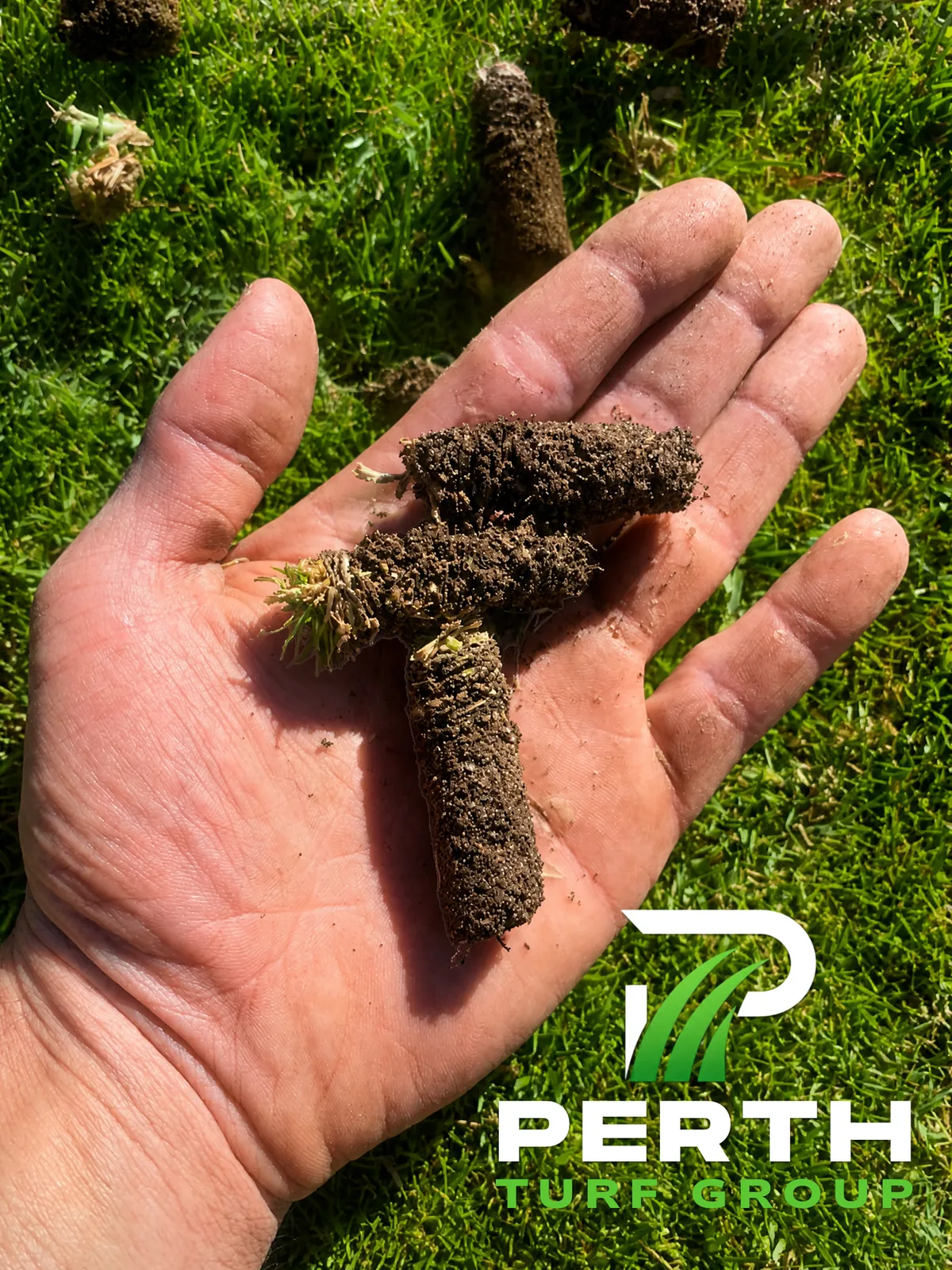
Soil cores from a core aeration job held in the hand above the lawn

Renovate

Core aeration

Late winter through autumn. Solid tine in winter.

Core aeration pulls plugs of soil out of the lawn to relieve compaction from foot traffic, cars parked on the lawn and builders rubble. Air, water and nutrients get back into the root zone, roots develop better and soil microorganisms recover.

We water lightly before coring so the plugs lift cleanly, because dry sand crumbles. If coring is the only service, we rake through and break up the cores so the loosened soil goes back into the profile. In winter, solid tine aeration relieves compaction with a quicker recovery.

  • Breaks up compacted soil
  • Better water and nutrient uptake
  • Deeper, healthier roots
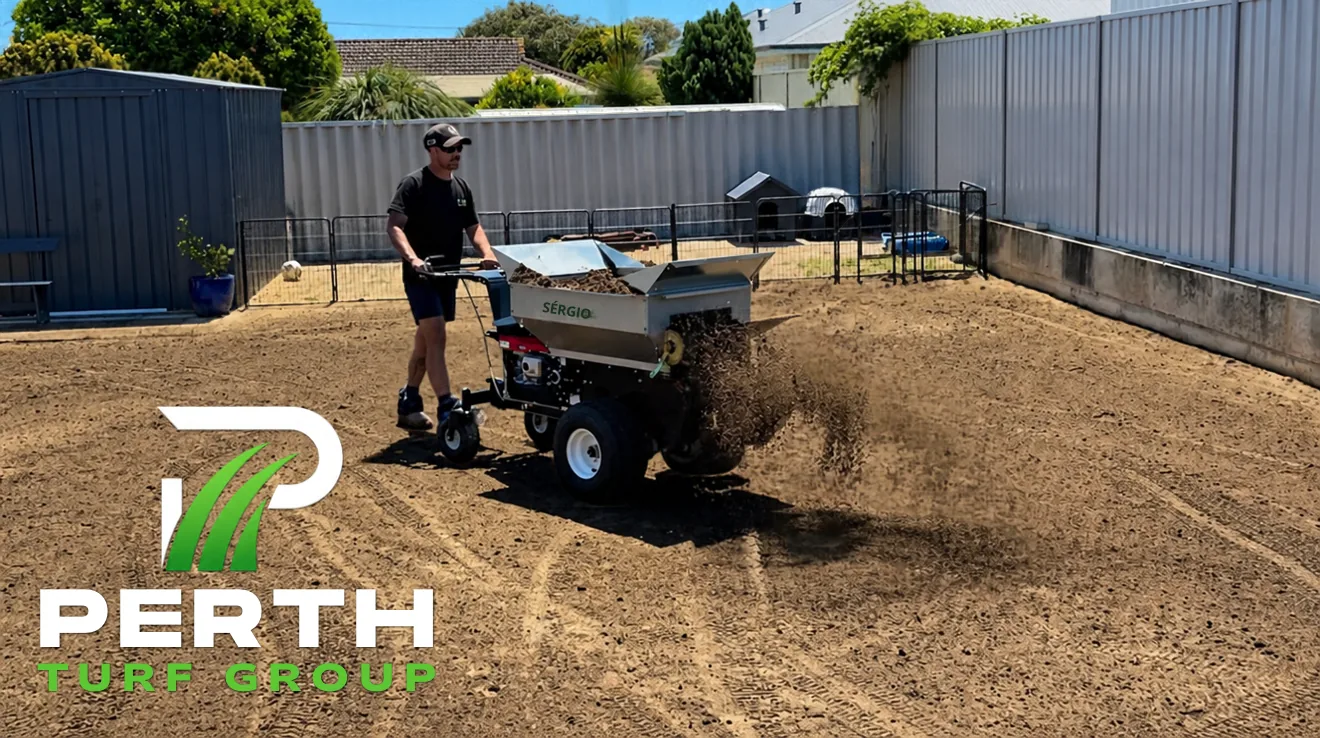
Operator spreading topdressing across a prepared yard with a motorised spreader

Renovate

Topdressing

Topdressing covers all or part of the lawn with sand or soil, usually straight after vertimowing and coring. There are two reasons to do it.

To fix levels and improve the turf surface, we use plasterers sand: a good foundation that drains well and does not crust and compact like brickies sand. To improve soil structure, we use a quality sand and compost mix that adds organic matter and holds more water. Changing soil structure is an ongoing process, not a one-off fix.

  • Levels bumps and hollows
  • Fills core holes for drainage
  • Builds organic matter over time
Cross-section of a lawnGrass blades, a thatch layer, topsoil with roots, and a sandy base, showing which layer each lawn treatment works on. Leafblades & crowns Thatchdead stems & roots Topsoilcompaction zone Rootswater & nutrients SandPerth base

Inside your lawn

Fix the layer that is causing the problem.

Most lawn problems start below the leaf. Pick a treatment to see which part of the lawn it works on.

Renovate FAQ

Common questions.

How often should a lawn be de-thatched?

It depends on the variety and how it has been looked after. Some grasses build thatch faster than others, and over-watering or over-fertilising speeds it up. Many lawns benefit every one to three years.

How long does a lawn take to recover after vertimowing?

In the growing season, a renovated lawn typically shows strong recovery within two to three weeks, helped along by core aeration, topdressing, fertiliser and a wetting agent.

Why water before core aerating?

Moist soil lets the cores come out cleanly. Dry Perth sand crumbles and the plugs do not lift properly.

Can you aerate in winter?

Yes, but we use solid tine aeration in winter instead of coring, because the lawn is dormant and recovers more quickly from solid tines.

Free quotes

Ready for a better lawn?

Tell us what you have, what is wrong with it and when you want it fixed. We will come back with a clear, free quote.